Rhino MHP Intelligence
Research built from the way parks are actually underwritten.
Original manufactured housing analysis on valuation, infrastructure, utilities, permits, financing, and transaction execution—built to help owners and operators make better decisions before a deal becomes expensive.
Normalize current operations before assigning value to upside.
Utilities, roads, homes, permits, and deferred maintenance belong in the economics.
A closing calendar is incomplete until operating permits and licenses are understood.
Seller notes and financing terms can change both value and certainty of close.
Research channels
Choose the question you are trying to answer.
Valuation Lab
Interactive cap-rate, NOI, rent-upside, and infrastructure sensitivity tools built around Rhino’s underwriting logic.
ExploreDeal Lab
Illustrative mobile home park cases that show how infrastructure, seller financing, occupancy, and cap rates alter value and execution risk.
ExploreState Intelligence
State-specific acquisition and operating issues built from current regulator sources—not fifty copies of the same page with a different state name.
ExploreHow Rhino Underwrites
A transparent explanation of normalized NOI, utility risk, capital needs, valuation ranges, and the limits of any quick screen.
ExploreInfrastructure Intelligence
Use Deal Math, the MHP Manifesto, and Rhino Standard to evaluate utilities, compliance, stabilization, and governance risk.
ExploreLatest research
Source-linked guides & original models.
9 matching research notes
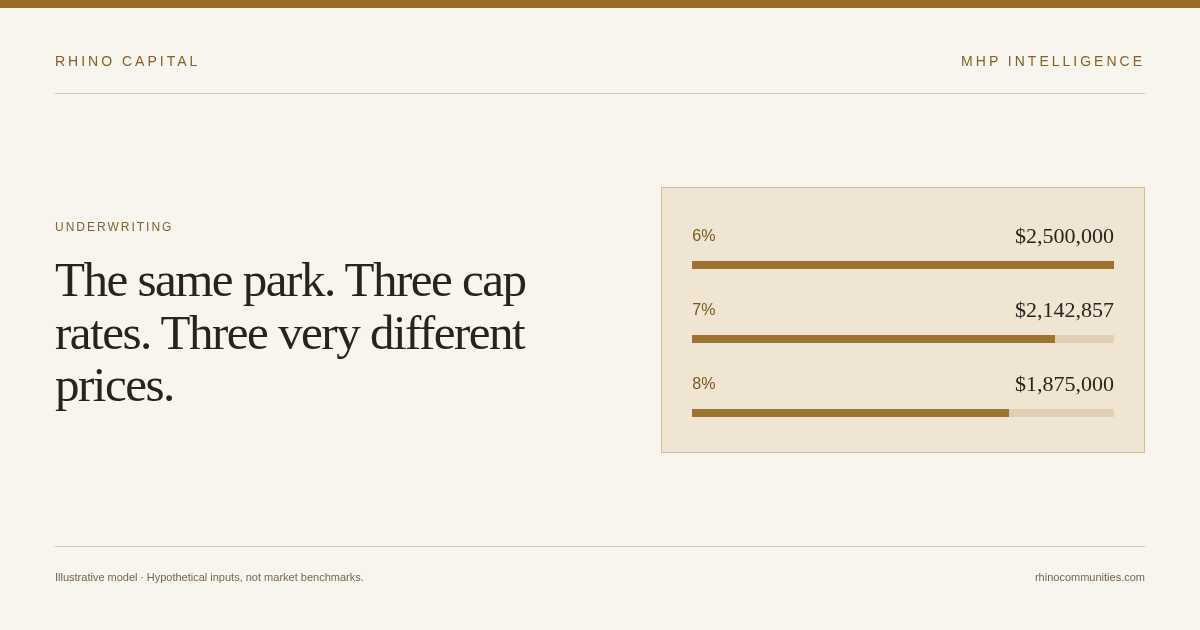
The same park. Three cap rates. Three very different prices.
An interactive, transparent NOI and cap-rate sensitivity model with explicit assumptions, downloadable calculations, and no invented market averages.
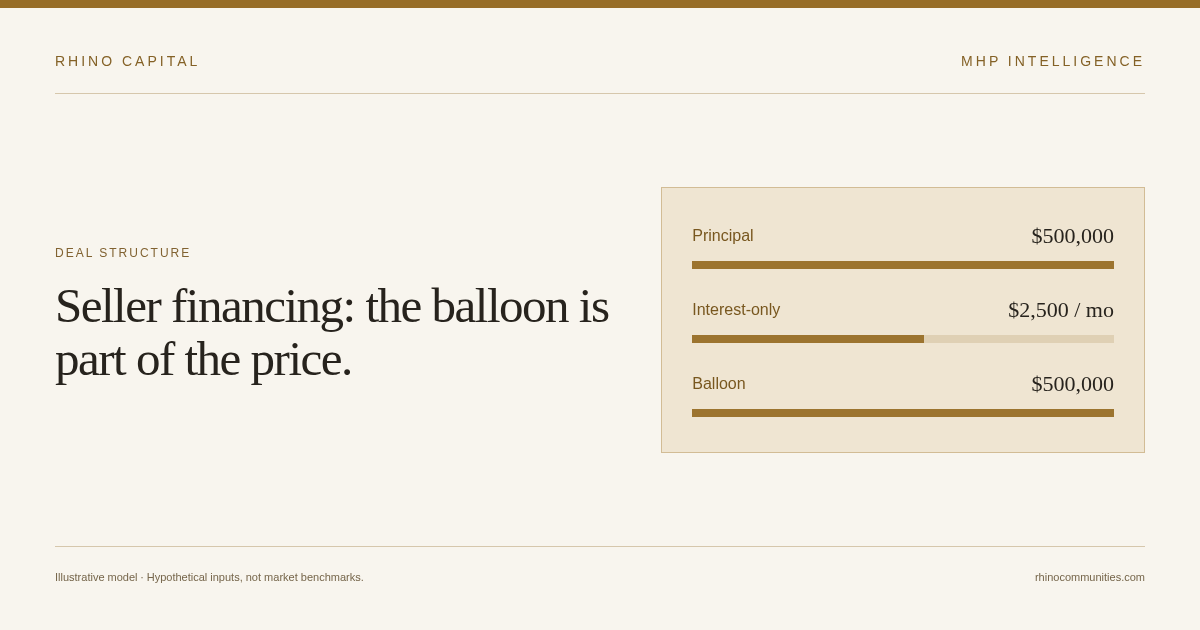
Seller financing: the balloon is part of the price.
Compare interest-only and amortizing seller notes with a live balloon calculation, explicit terms, and a practical review checklist.
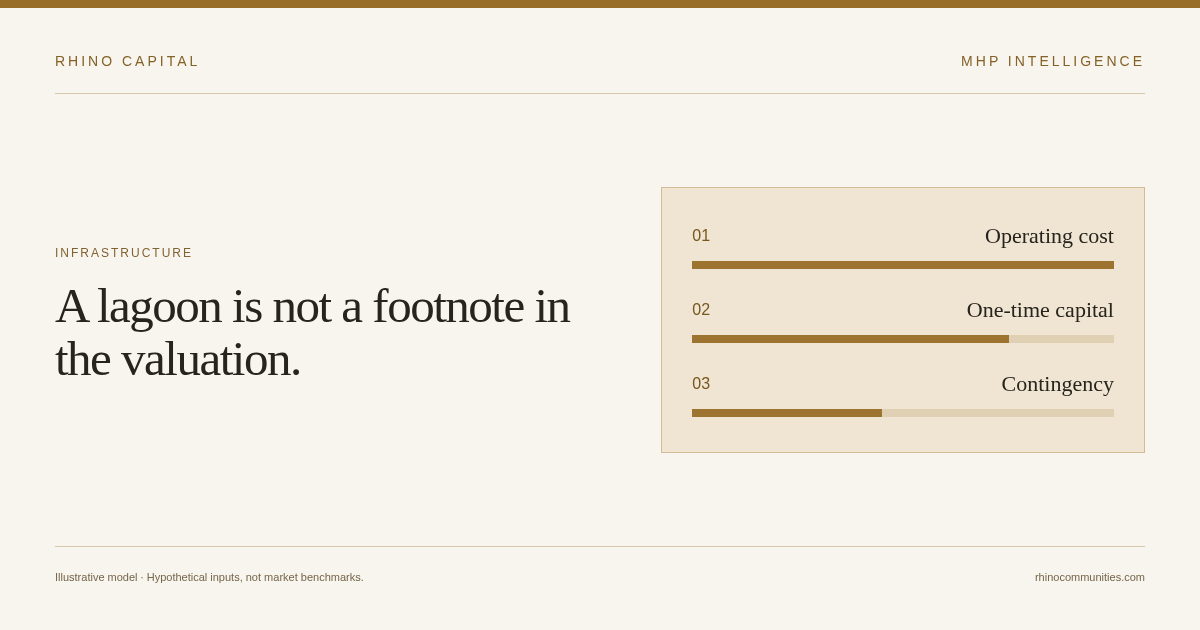
A lagoon is not a footnote in the valuation.
Separate recurring operating costs, one-time capital work, permit transfer and uncertainty when reviewing a manufactured housing lagoon system.
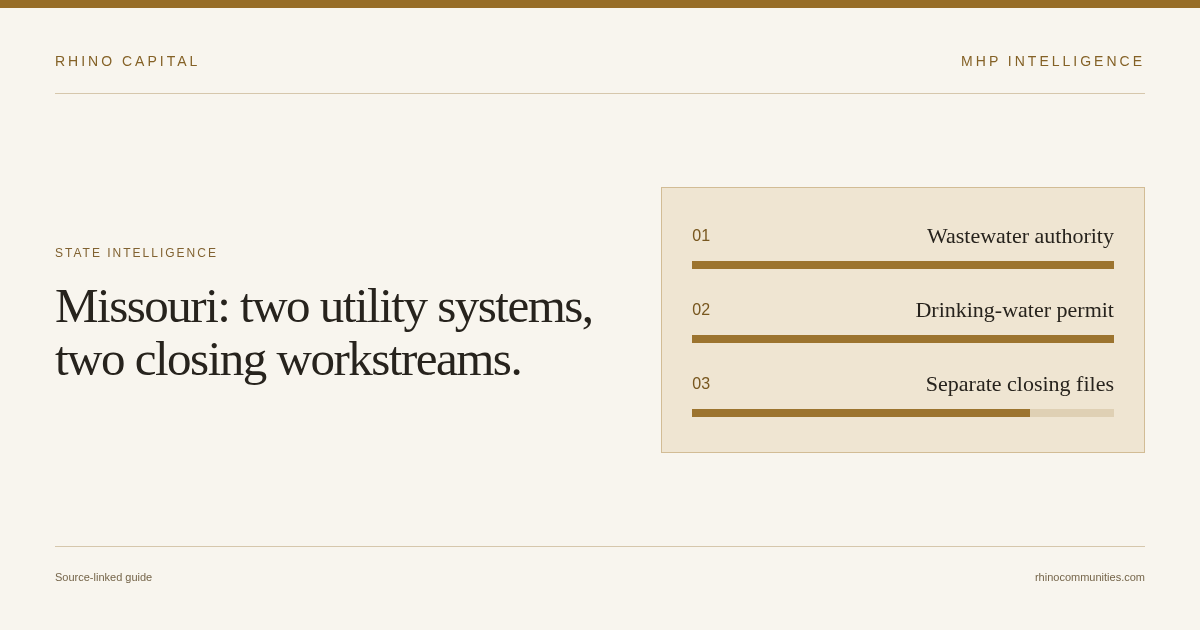
Missouri: two utility systems, two closing workstreams.
A Missouri acquisition guide to wastewater authority and separate drinking-water transfer documentation, with direct Missouri DNR sources.
Indiana: underwrite the tax process, not a reset assumption.
How Indiana assessment trending changes mobile home park diligence, with assessor-document checklists and direct DLGF sources.
Texas: a private well can come with a public-water obligation.
A TCEQ-source-linked guide to public water system identification, acquisition records, responsibility and emergency preparedness questions.
Ohio: do not assume the seller’s park license transfers.
Ohio park-license diligence for acquisition teams, with direct links to the administrative rules and a practical closing preparation checklist.
Inside a Missouri review: inspect the system, verify the authority.
An anonymized Rhino diligence-planning case showing how physical lagoon review, sewer scoping and separate operating permissions become distinct workstreams.
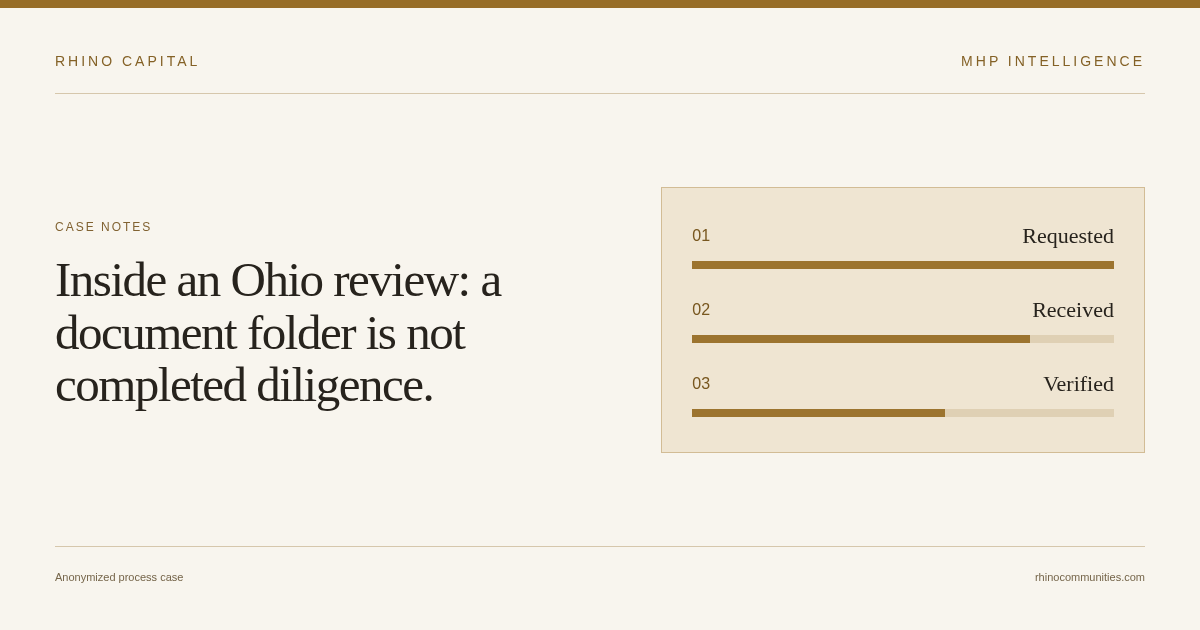
Inside an Ohio review: a document folder is not completed diligence.
An anonymized Rhino case note on missing leases, utility records, home documentation and the difference between delivery and verification.
Illustrative models, source-linked state guides and anonymized process notes are labeled separately. They are not presented as national market averages or promises of outcome.
Use the work
The goal is not content volume. It is decision advantage.
Every Rhino Intelligence page is designed to answer a real acquisition, valuation, operating, or closing question. Where a point depends on state law or regulator practice, the page links to the responsible government source. Where a case is illustrative, it says so.
That distinction matters. Manufactured housing is too operationally specific for generic real estate advice wearing an MHP label.

