The review question
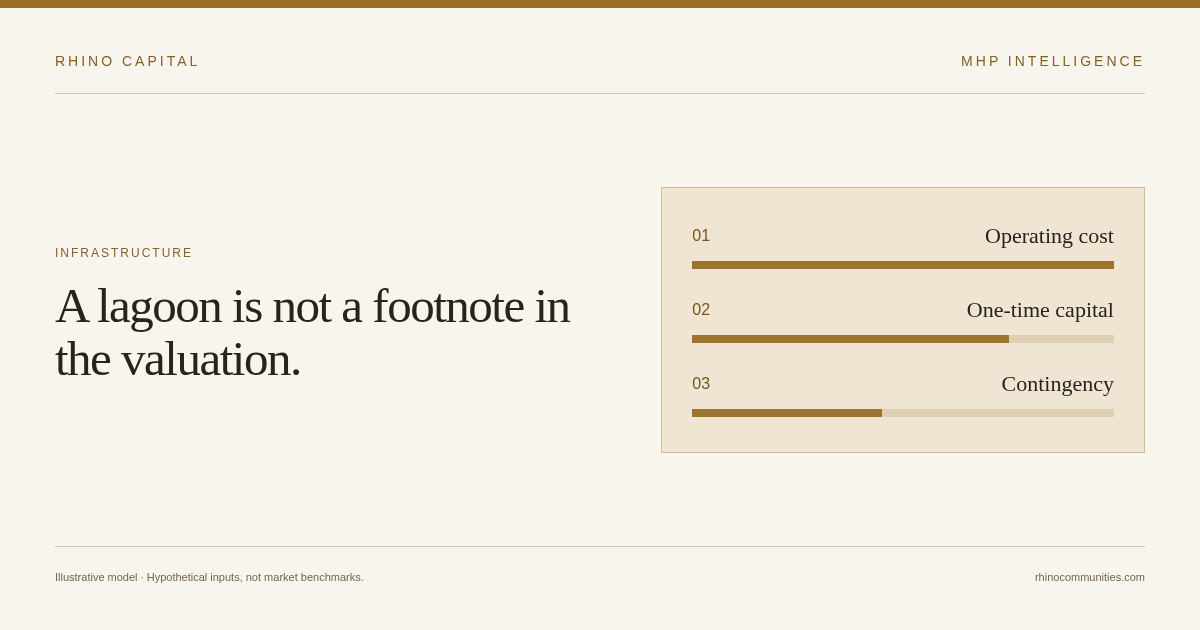
The working concern was whether a lagoon was operating properly and what a clay sewer network might conceal. The requested scope focused on lagoon performance, sludge depth and sewer-line breaks, bellies and major root intrusion.
These are anonymized diligence-planning observations from Rhino’s September 2026 review work. No inspection result, remediation cost, permit approval or closing outcome is asserted here. Seller, resident and counterparty details are intentionally excluded.
The control Rhino used
Physical questions were separated from operating-permission questions. The planning file called for a written scope, the inspection output and a record of limitations. A parallel workstream identified permits, transfer requirements and responsible entities.
The next action is evidence collection, not declaring the system safe because a vendor has been contacted. An appointment, an inspection report and a regulatory approval are three different milestones.
The transferable lesson
Make an inspection order precise enough that the result answers an underwriting question. Then reconcile any finding with a repair estimate, reserve or decision. Avoid ordering unrelated services merely to create a thicker diligence folder.
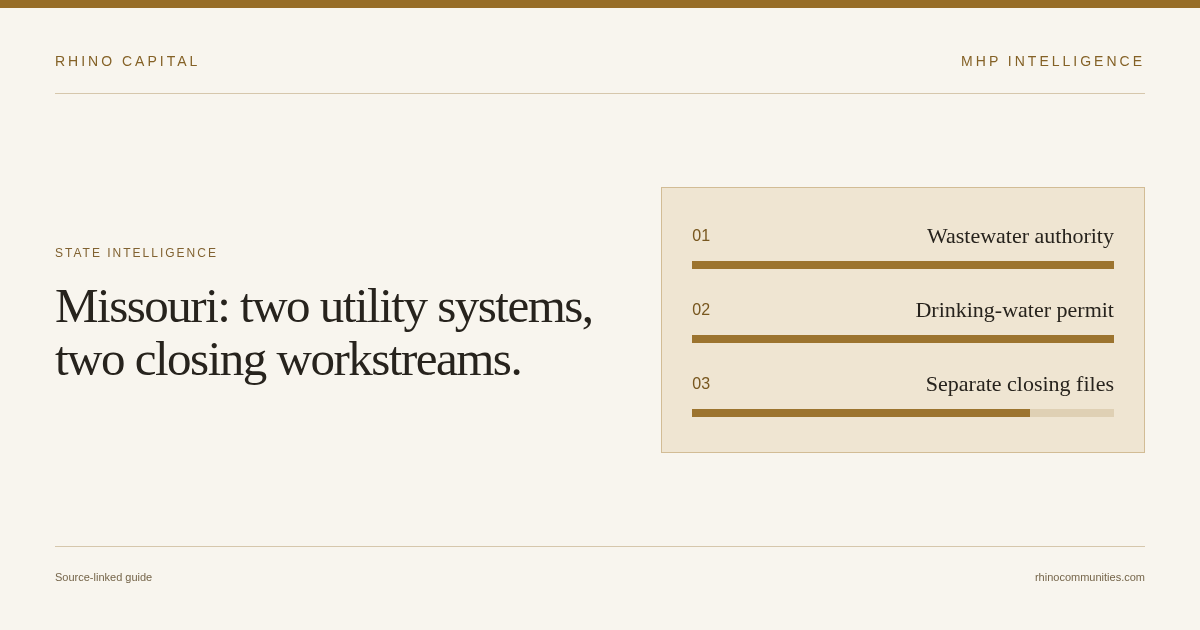
Missouri DNR’s owner/continuing-authority guidance and separate drinking-water transfer form support treating responsibility and water authorization as their own checks.
Sources: Missouri DNR: owner and continuing authorityMissouri DNR: Permit to Dispense transfer application