Start with the public water system ID
TCEQ describes a public water system as supplying water for human consumption and serving at least 15 service connections or at least 25 people for at least 60 days of the year. Classification and actual operations matter; confirm the facility’s status rather than using the park’s marketing description.
Sources: TCEQ: what is a public water system?
Build the operating evidence file
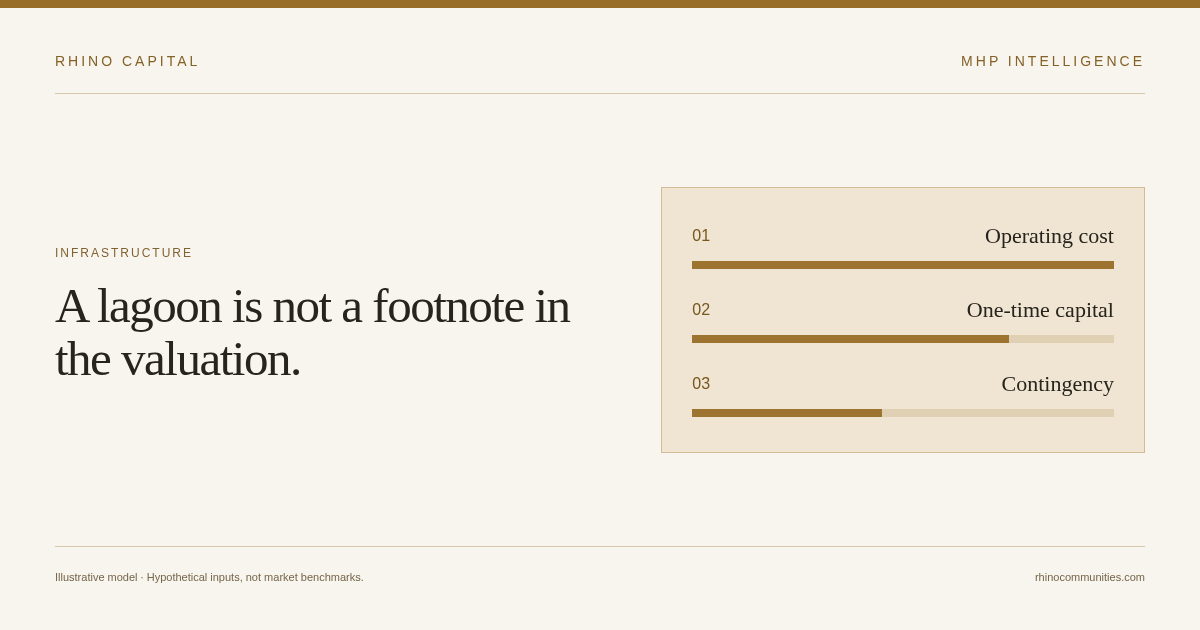
Our acquisition checklist asks for the PWS identifier, agency contacts, sampling and testing records, operator arrangements, inspection findings, notices, equipment information and unresolved corrective actions. A document stating that equipment exists is not a condition or capacity assessment.
Record each missing item and ask the relevant agency or qualified specialist what further review is necessary. Do not turn an unanswered question into a zero-dollar budget.
Check the emergency plan
TCEQ maintains emergency-preparedness requirements and update guidance for affected utilities, including circumstances involving new equipment or changes in service. Confirm applicability to the system; do not assume every park has the same requirement.
Sources: TCEQ: emergency preparedness plans
Tie the file to the closing plan
Assign responsibility for ownership information updates, continuing operations, specialist review, lender conditions and corrective work. Determine which items must be resolved before closing and which require an expressly documented post-closing plan. Counsel and the relevant agencies should confirm the required steps.